


Support your nervous system.
Enjoy the side effects.
 Reduced Stress
 Supports Anxiety Regulation
 Craving Response Control
 Nervous Habit Regulation
 Improved Heart Rhythm
 Improved Nervous Balance
 Reduced Blood Pressure
 Improved Heart Balance
 Improved Calm
 Improved Mental Clarity
 Reduced Reactivity
 Improved Sleep
 Improved Emotional Balance
 Improved Focus
 Digestive Support
 Improved Stress Resiliance

It´s as easy as 1-2-3: For skeptics, by skeptics
Research shows controlled exhalation can lower physiological stress markers within seconds.
We don’t believe in “just relax.” We believe in mechanisms. Slower exhalation stimulates vagal pathways. Vagal activation shifts autonomic balance. Autonomic balance lowers reactivity.
That’s not mindfulness fluff. That’s nervous system science as easy as 1-2-3.
 Inhale through your nose for 4–5 seconds. Nasal breathing supports oxygen efficiency.
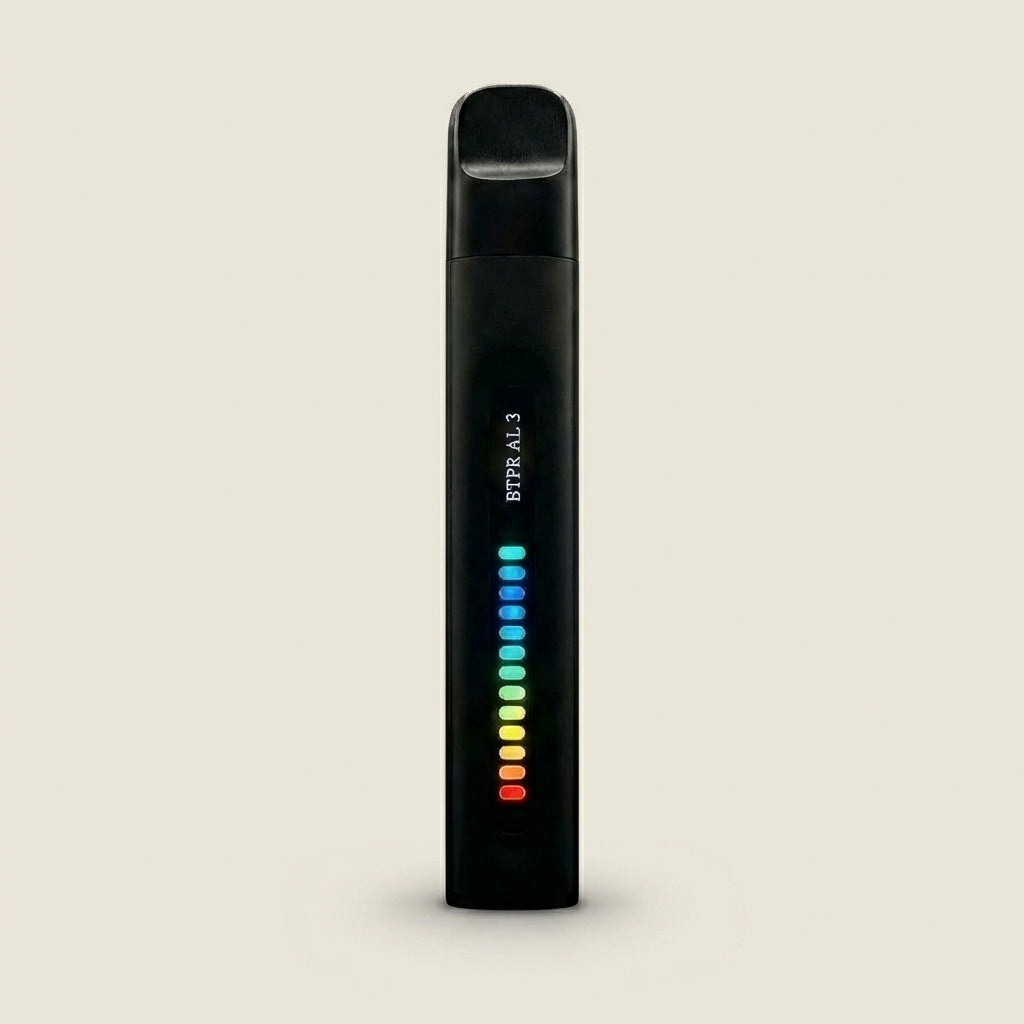
 Exhale 6–8 seconds through GRIZX NVR-1. Calibrated resistance slows and extends your breath.
 Follow the GRIZX NVR-1 light + count cue. Visual pacing steadies focus and supports vagal activation.
Built on Biology. Not B.S. Behaviour Hacks.
Engaging Your Body’s Built-In Calming Mechanisms

|
Anxiety Apps | Other Breathing Tools | |
|---|---|---|---|
| Attentional anchoring | |||
| Breath pattern memory | |||
| Real-time feedback | |||
| Parasympathetic exhale | |||
| Visual cues (number + LED) | |||
| Dual biofeedback (capacity + flow) |

We´re not about pseudoscience and half-truths

100%
Visual breathing feedback increases adherence by X2
Biofeedback research consistently shows that visual cues (lights, progress indicators, scales): Improve breathing consistency, Increase session completion and Reduce cognitive load
40%
Reduction in panic intensity
Cognitive-behavioral and interoceptive exposure research shows that: Counting breaths, External pacing cues, Predictable rhythm reduce panic severity by 30–40%, because they: Anchor attention, Reduce catastrophic misinterpretation of bodily sensations, Increase perceived control
40%
Reduction in anxiety symptoms
A large systematic review (Frontiers in Human Neuroscience, 2017) found that slow breathing interventions (especially those emphasizing longer exhales) produced moderate to large reductions in anxiety, often in the 30–40% range across validated anxiety scales.
50%
Increase in vagal activity
Multiple studies measuring heart rate variability (HRV) show that slow breathing at ~5–6 breaths/min, especially with longer exhales, significantly increases vagal tone (measured via RMSSD and HF-HRV).
25%
Increase in cognitive control
Studies using attention and executive-function tasks show that paced breathing improves: Prefrontal cortex engagement, Emotional regulation and Attentional stability. This is linked to reduced limbic (threat) dominance.
Based on published biofeedback research. Individual results may vary. Not a medical device.
SHIFT is a wellness tool and is not intended to diagnose, treat, cure, or prevent any disease or disorder.
What´s the reasearch saying?
-

Relaxation techniques: Breath control helps quell errant stress response
Read ArticleHarvard researchers explain how slow, controlled breathing activates the body’s natural relaxation response and supports stress regulation.
-

Effects of voluntary slow breathing on heart rate and heart rate variability: A systematic review and a meta-analysis
Read ArticlePublished research explores how paced breathing influences HRV — a key marker of autonomic and cardiovascular regulation.
-

The Vagus Nerve: A Key Player in Your Health and Well-Being
Read ArticleAmong the many nerves that make up this system, the vagus nerve stands out for its profound influence on physical and mental health. Often referred to as the "wandering nerve" because of its extensive reach throughout the body


You’re in good company - Real people. Real calm.


FAQs
Shipping Information
Shipping Information
Processing Time
We’re not a faceless warehouse pushing boxes down a conveyor belt.
Each order is carefully packed and prepared before shipping.
Please allow 1–3 business days for processing.
Once your order ships, you’ll receive tracking straight to your inbox.
Where We Ship
We currently ship to the following regions:
🇺🇸 United States
🇬🇧 United Kingdom
🇪🇺 European Union
🇦🇺 Australia
If your country isn’t listed and you really want in, email us — we’ll see what’s possible.
Shipping Times (Estimated)
Shipping times vary depending on your location and local customs processing.
USA: 5–10 business days
UK: 4–8 business days
Europe: 4–8 business days
Australia: 6–12 business days
Once your order leaves our hands, delivery times are controlled by the carrier and customs authorities. Tracking is always provided so you can follow your order every step of the way.
Duties, Taxes & Customs
Customs duties, import taxes, or handling fees are set by your country and are not included in your order total.
If fees are charged, they’re collected by customs — not us. We wish we could fight them for you, but unfortunately, that’s out of our hands.
Carriers & Tracking
Orders are shipped using trusted international carriers, selected based on destination and delivery speed.
Once your order ships, you’ll receive:
A tracking number
A tracking link
Full permission to check it more often than you’d like to admit
Delayed or Lost Parcels
International shipping can be unpredictable at times. Once your order is with the carrier, delays can happen — especially during customs processing.
If your tracking hasn’t updated for a while or your parcel appears lost, reach out to us and we’ll help investigate and support you as best we can.
Questions?
Email us anytime at support@grizxlab.com
We’re human, we reply, and we actually care.
Returns & Refunds
Returns & Refunds
We want you to feel confident about your purchase. If something isn’t quite right, we’re here to help.
We stand behind the quality of every GRIZX product. Due to the personal nature of this device, our policy is designed to ensure safety, hygiene, and fairness for all customers.
Hygiene & Use Policy
GRIZX NVR-1 is a personal-use breathing device that comes into contact with the mouth.
For hygiene and safety reasons, we do not accept returns or exchanges on any opened or used products, including items with broken hygiene seals.
Returns Window
We accept returns within 30 days of purchase, provided the item meets the conditions below.
Eligibility
We do not accept returns or offer refunds for:
- Opened or used products
- Items with broken hygiene seals
- Change of mind or personal preference
- Sale or discounted items
- Gift cards
How to Start a Return
To initiate a return or exchange, please email us at support@grizxlab.com with:
- Your order number
- The reason for the return
We’ll reply with next steps and return instructions.
Important Notes
- Returns must be sent back at the customer’s expense
- Original shipping fees are non-refundable
- We do not accept returns on:
- Used items
- Items with opened or used mouthpieces
- Sale or discounted items
- Gift cards
Faulty or Incorrect Items
If your order arrives damaged, faulty, or incorrect, please contact us as soon as possible.
Include photos if you can — we’ll make it right.
Refunds
Once your return is received and inspected, we’ll notify you of the outcome.
Approved refunds will be issued to your original payment method within a few business days.
Questions?
If you’re unsure whether your item qualifies for a return, reach out before sending it back — we’re happy to help.
How It Works
How It Works
1. Slows the Breath Automatically
Airflow resistance that guides regulation
SHIFT introduces gentle resistance on the exhale, naturally encouraging a longer, steadier breath. Slower exhalation is associated with parasympathetic nervous system activation — the body’s built-in calming response.
What this feels like:
Your chest softens. The urgency fades. Your body settles before your mind catches up.
2. Makes Calm Visible
Real-time numerical breath feedback
SHIFT shows your exhale output as a clear numerical value, turning breathing into something tangible and measurable. This anchors attention in the present moment and reduces uncertainty during stress.
What this feels like:
Reassurance. Proof. Confidence that your breath is actually slowing.
3. Uses Visual Cues Your Nervous System Understands
Color-based biofeedback
The color scale progresses as your breath deepens, giving your nervous system a simple, non-verbal cue to follow. Visual feedback reduces cognitive load and supports regulation without instruction.
What this feels like:
You don’t have to think — you just follow the light.
4. Gives the Mind Something Steady to Hold
Counting and rhythm
As you exhale, SHIFT counts with you. Predictable rhythm and counting are known to reduce mental spirals by occupying attention and interrupting threat-focused thinking.
What this feels like:
Order replaces chaos. The mind steadies as the breath slows.
5. Builds Trust Through Memory
Saved breath results
SHIFT stores your most recent results, showing how your breath changes across moments. This reinforces self-trust and reminds you that regulation is possible — even when stress returns.
What this feels like:
“I’ve done this before. I know what value regulated exhale should be.”
6. Builds Exhale Capacity Over Time
Progress through use
With continued use, controlled slow breathing supports improved expiratory control and breath efficiency. Over time, many users notice they can sustain longer, steadier exhales with less effort.
What this feels like:
Your breath feels stronger. Regulation comes easier. Calm becomes more accessible.
7. Designed for Quiet, Private Use
Discreet by design
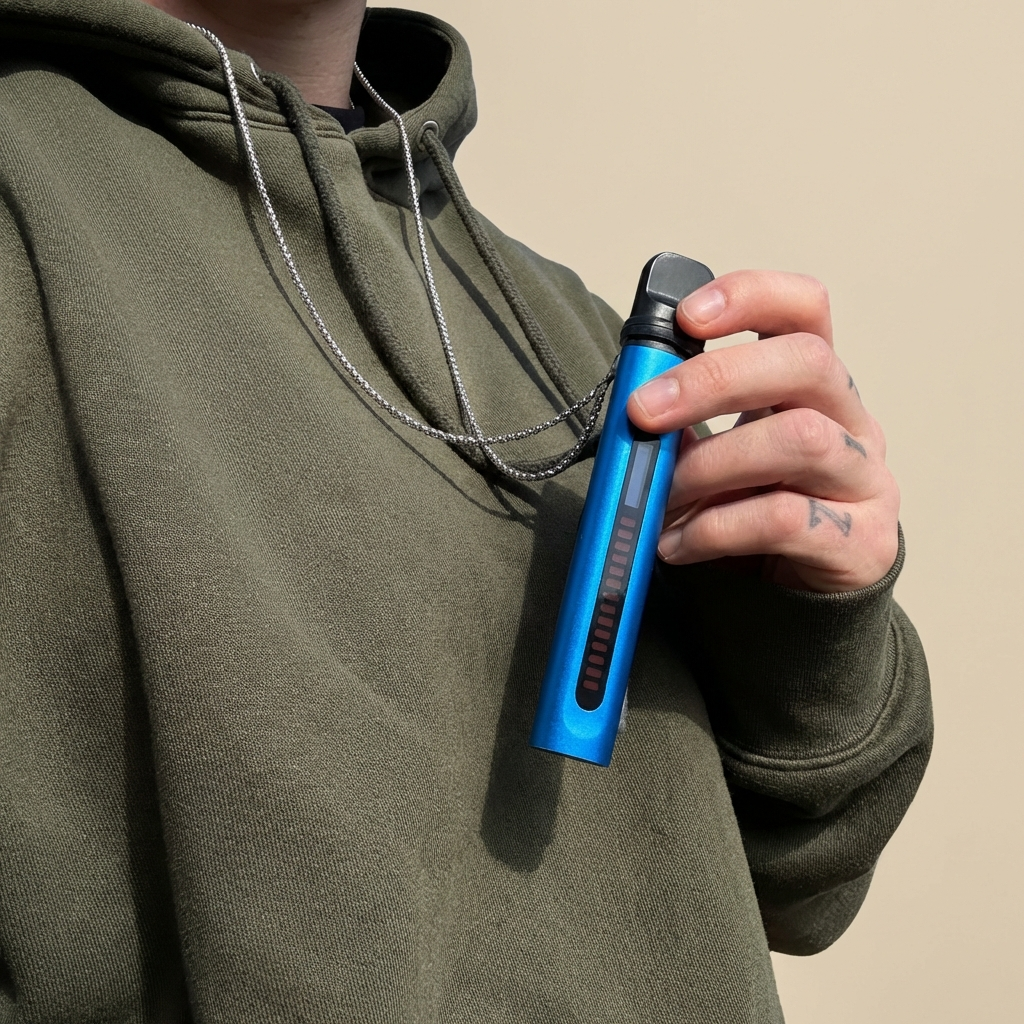
SHIFT is slim, lightweight, and silent — built to be used anywhere without drawing attention. A physical anchor you can rely on without explanation, screens, or guidance.
What this feels like:
Control, dignity, and privacy — exactly when you need them.
Is GRIZX Lab SHIFT For Me?
Is GRIZX Lab SHIFT For Me?
SHIFT is for people who know what helps — but can’t access it when their body is activated.
It’s for moments when stress shows up physically, not intellectually.
SHIFT fits into real life when:
- Crowds, noise, or public spaces make your body tense
- Work pressure keeps your system stuck in overdrive
- Meetings, presentations, or speaking up trigger nervous energy
- Your mind is ready, but your breath won’t slow
- You need calm without closing your eyes or explaining yourself
- You want to reset between moments — not escape your day
- Quitting smoking or vaping, use physical and visual cues to replace bad habits
SHIFT gives you a physical way to slow your breath, anchor your attention, and regain control — quietly, privately, and on your terms.
No apps. No counting. No instructions.
Just something real to hold when regulation matters.
Health Benefits
Health Benefits
Nervous System & Stress Health
- Reduced Stress
- Lower Anxiety
- Improved Regulation
- Increased Parasympathetic Activity
- Reduced Sympathetic Arousal
- Lower Physiological Stress
Cardiovascular Health
- Improved Heart Rate Variability
- Lower Blood Pressure
- Improved Cardiovascular Regulation
- Improved Baroreflex Sensitivity
- Stabilized Heart Rate
Mental & Emotional Health
- Improved Emotional Regulation
- Reduced Emotional Reactivity
- Improved Mood
- Reduced Mental Tension
- Improved Stress Resilience
Cognitive Health
- Improved Attention
- Improved Cognitive Control
- Improved Mental Clarity
- Reduced Cognitive Load
Sleep & Recovery Health
- Improved Sleep Quality
- Improved Sleep Readiness
- Reduced Sleep Latency
- Improved Recovery
Immune & Inflammatory Health
- Reduced Inflammatory Signaling
- Improved Neuroimmune Regulation
- Improved Immune Balance
Digestive & Gut Health
- Improved Digestive Regulation
- Improved Gut–Brain Communication
- Improved Gastrointestinal Function
Whole-Body Regulation
- Improved Autonomic Balance
- Improved Physiological Homeostasis
- Improved Systemic Regulation
What does slow breathing actually do to the body?
What does slow breathing actually do to the body?
Slow, controlled breathing can shift the nervous system toward the parasympathetic (“rest and regulate”) state and is commonly measured through changes in heart rate variability (HRV).
https://pmc.ncbi.nlm.nih.gov/articles/PMC5709795/https://pubmed.ncbi.nlm.nih.gov/35623448/
Does slow breathing activate the vagus nerve?
Does slow breathing activate the vagus nerve?
Slow breathing is associated with increased cardiac vagal activity and parasympathetic regulation, though it is different from medical vagus nerve stimulation devices used clinically.
https://pubmed.ncbi.nlm.nih.gov/35623448/https://www.mayoclinic.org/tests-procedures/vagus-nerve-stimulation/about/pac-20384565
Can slow breathing reduce stress or anxiety?
Can slow breathing reduce stress or anxiety?
Breathing interventions are associated with reduced perceived stress and anxiety in many studies, though effects vary depending on method, consistency, and individual differences.
https://www.mdpi.com/2076-3425/13/12/1612https://www.nature.com/articles/s41598-025-92017-5
Does breathing affect heart rate and blood pressure?
Does breathing affect heart rate and blood pressure?
Slow breathing can improve baroreflex sensitivity — a key mechanism in blood pressure regulation — and some studies show reductions in resting blood pressure over time.
https://www.ahajournals.org/doi/10.1161/01.hyp.0000179581.68566.7dhttps://www.sciencedirect.com/science/article/abs/pii/S0002914917306185
Can regulating the nervous system influence inflammation?
Can regulating the nervous system influence inflammation?
The vagus nerve plays a role in the “inflammatory reflex,” a neural pathway that can modulate inflammatory signaling, though translating this into everyday practices remains an active research area.
https://www.jci.org/articles/view/30555https://pubmed.ncbi.nlm.nih.gov/35300992/
Does breathing affect digestion?
Does breathing affect digestion?
The vagus nerve is a primary communication pathway between the brain and gut and supports the “rest and digest” state involved in gastrointestinal function.
https://pmc.ncbi.nlm.nih.gov/articles/PMC6671930/
Can slow breathing help with mood or emotional regulation?
Can slow breathing help with mood or emotional regulation?
Breathing practices engage neural pathways linked to emotional regulation and are associated with improved mood in many non-clinical studies, though results vary.
https://www.mdpi.com/2076-3425/13/12/1612
Can slow breathing improve sleep?
Can slow breathing improve sleep?
Slow-paced breathing has been associated with improved sleep quality and increased nocturnal parasympathetic activity in controlled studies.
https://pmc.ncbi.nlm.nih.gov/articles/PMC6406675/https://pubmed.ncbi.nlm.nih.gov/25234581/
Is breathwork the same as medical vagus nerve stimulation?
Is breathwork the same as medical vagus nerve stimulation?
No. Clinical vagus nerve stimulation is a regulated medical treatment used for conditions such as epilepsy and treatment-resistant depression, while breathwork is a behavioral practice associated with nervous system regulation.
https://www.mayoclinic.org/tests-procedures/vagus-nerve-stimulation/about/pac-20384565
What is heart rate variability (HRV) and why does it matter?
What is heart rate variability (HRV) and why does it matter?
HRV measures variation between heartbeats and is commonly used as a physiological marker associated with autonomic nervous system balance and cardiac vagal activity.
https://pubmed.ncbi.nlm.nih.gov/35623448/
How often should slow breathing be practiced?
How often should slow breathing be practiced?
Research protocols vary, but many studies use consistent daily practice over weeks to observe measurable physiological changes.
https://pmc.ncbi.nlm.nih.gov/articles/PMC5709795/